  • Real Estate Education
  • Real Estate Finance

Detroit Just Unlocked $75 Million in Low-Interest Loans for Real Estate Investors

If you invest in Detroit real estate or have been thinking about it, there’s a program you need to know about right now.

I’ve been working with Metro Detroit investors for over 15 years, across leasing, property management, and acquisitions. I’ve seen a lot of programs come and go. This one is worth stopping and paying attention to.

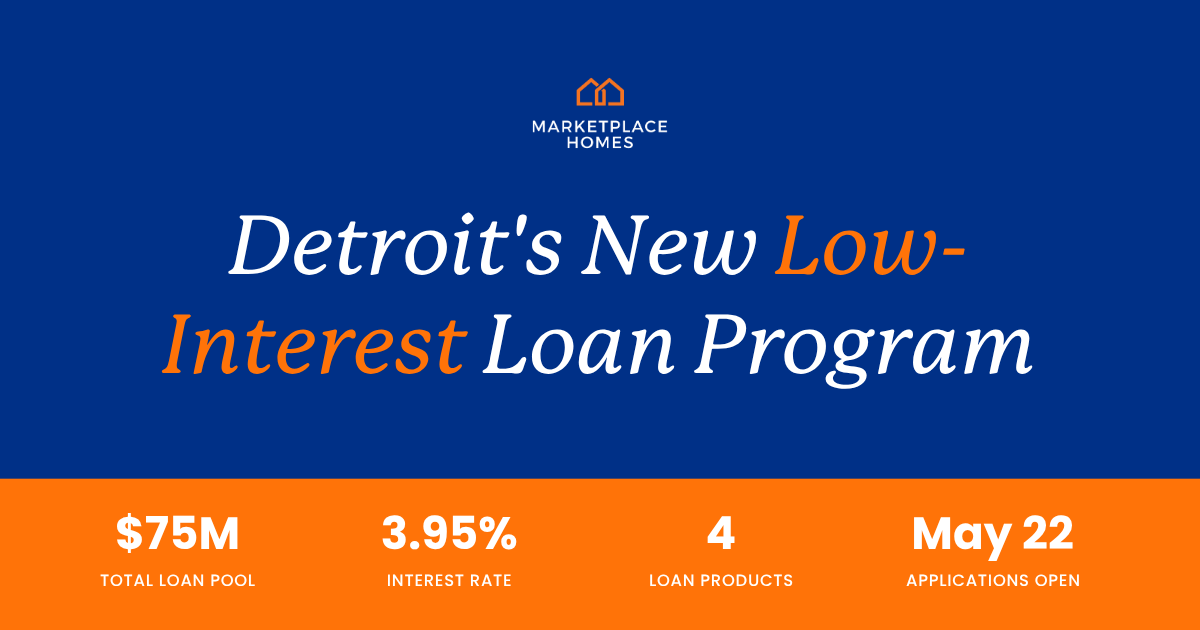
The City of Detroit just released a Notice of Funding Availability for the ALFAH Section 108 Loan Program. ALFAH stands for Affordable Loans for Affordable Housing. It’s backed by $75 million in federal funding through HUD, and applications open May 22, 2026.

It’s not a grant. It’s a loan program. But the rate gap between this program and conventional financing right now is significant enough to completely change the math on a deal.

3.95%
Section 108 Rate
vs.
6.75%
Prime Rate Today
That spread matters. On a $3 million project, the difference between 3.95% and 6.75% is real money every single month for the life of the loan.

I dug into the full developer training guide from the City of Detroit’s Housing and Revitalization Department so you don’t have to. Here’s your plain-English breakdown of everything you need to know before applications open.

What Is the Section 108 Program?

Section 108 is a federal loan guarantee program administered by HUD. It’s available to cities that receive Community Development Block Grant (CDBG) funds, and Detroit is one of them.

In 2025, Detroit applied for and received approval for a $75 million loan pool dedicated to affordable housing development. The City is now distributing those funds to individual developers and investors through this NOFA.

Important: this isn’t gap financing. Your project needs to be able to support the debt service. This program is designed for deals with real financial viability, not as a last-resort subsidy stack.

Who Is This Program For?

Before we go further, here’s the eligibility baseline you need to understand:

Property must be residential or mixed-use with a minimum of 4 units
At least 50% of units rented at or below 80% of Area Median Income (AMI)
Activity must qualify as CDBG-eligible: acquisition, rehab, or new construction (new construction for CBDOs only)
Borrower must demonstrate financial viability and ability to repay

This is a program built for multifamily investors, portfolio builders, and developers. If you’re looking at a duplex or a single-family rental, this isn’t the right fit. But if you’re working with 4 or more units, or thinking about scaling in that direction, keep reading.

The 4 Loan Products Explained

1

Short-Term Acquisition Loan

Davis-Bacon: Not Triggered

Loan Size$500K–$2.5M (80% LTV)
Term2 yrs + 6 mo option
AmortizationInterest only
Rate~3.95%
Best ForVacant residential & mixed-use
Think of it as a bridge product. Useful when you’ve identified a vacant building and need short-term capital during predevelopment.
2

Acquisition Mini-Perm Loan

Davis-Bacon: Not Triggered

Loan Size$1M–$5M
Term7 years
Amortization15–20 yr; I/O during construction
Rate~3.95%
Best ForOccupied rehabs
Subordinate financing executed at closing. The 7-year term gives you room to stabilize and reposition after rehab.
3

Senior Construction-to-Perm

Davis-Bacon: Triggered

Loan Size$5M–$15M construction
Term20 years
Amortization40 yr; I/O during construction
Rate~3.95%
Best ForLIHTC projects
Biggest product in the suite. Wraps construction and permanent financing into one loan. Works best for 20+ unit projects.
4

Tax Credit Equity Bridge

Davis-Bacon: Triggered

Loan Size$5M–$15M (90% LIHTC equity)
Term5 years
AmortizationInterest only
Rate~3.95%
Best ForLIHTC deals
Specifically for tax credit deals. Bridges the equity contribution to improve investor returns and credit pricing.

Federal Compliance Requirements

Because this is federally backed, there are cross-cutting requirements that apply to all borrowers. These aren’t optional, and knowing about them upfront is part of doing your homework.

Part 58 Environmental Review (all activities) Davis-Bacon Prevailing Wage (rehab products)
Build America, Buy America (BABA) Section 3: Employment Opportunities
Section 504: Accessibility Standards City of Detroit Executive Order 2024-02
Tenant Retention Requirements (occupied rehab) Detroit Home Connect & HCV Acceptance

The compliance load is real. That’s why this program works best for experienced operators who already have a team in place to handle HUD-related requirements.

The Application Process, Step by Step

Approval runs through the City of Detroit, a third-party underwriter, HUD, and City Council. Here’s the full flow.

1
Initial Application
Submitted through the City’s Neighborly software. Covers borrower info, loan details, project capacity, construction timeline, affordability, and financials.
2
Threshold Review
City’s HRD team reviews eligibility, financial capacity, creditworthiness, and alignment with City and HUD requirements. Passing projects receive a Threshold Approval Letter.
3
Commitment-Level Application
Deeper package including market study, Environmental Site Assessment, Capital Needs Assessment, Preliminary Plan Review, BABA certification, and tenant relocation plan if applicable.
4
Underwriting
Third-party underwriter reviews feasibility, borrower experience, financial capacity, and collateral. Investment Committee issues a Letter of Interest to qualifying projects. Underwriting cost is paid by borrower but is an eligible project cost.
5
HUD Review
HUD Field Office reviews project details, national objective, and eligible activities. Issues a Letter of Determination. HUD National Office prepares closing documents.
6
City Council Approval
HUD-approved projects go to Detroit City Council through the Planning and Economic Development committee and then full Council vote.
7
Closing
City closes with HUD and then with the borrower. Funds disbursed through a draw request process.
8
Compliance & Monitoring
Ongoing monitoring throughout the loan term: construction inspections, draw reviews, financial reporting, and eligibility compliance.

Timeline at a Glance


May 22, 2026
Applications open. Rolling NOFA with no hard close date.
Q3/Q4 2026
First City Council recommendations expected.
Q1 2027
First closings projected.

If you want to be in the first wave, getting your application in early matters.

Is This the Right Program for Your Deal?

The City’s own training materials are pretty honest about the tradeoffs, and I think that’s worth sharing directly.

Good Fit
Experienced developers familiar with HUD programs
Projects of 20+ units that can absorb transaction costs
LIHTC deals seeking low-cost construction financing
Multifamily projects with healthy income mix to support debt
Harder Fit
Investors doing 2 to 4 unit deals
Operators without prior HUD compliance experience
Projects that can’t demonstrate debt service coverage
Single-family rental investors

If you’re not sure whether your deal qualifies, that’s exactly the kind of conversation worth having before May 22nd.

How to Apply

Applications are submitted through the City of Detroit’s Neighborly software portal starting May 22, 2026. For program questions, contact the City directly at HRD108NOFA@detroitmi.gov. You can also sign up for HRD email notifications at detroitmi.gov.

Applications open May 22, 2026 Questions? Contact HRD108NOFA@detroitmi.gov

"*" indicates required fields

This field is for validation purposes and should be left unchanged.

By making this submission, you agree that Marketplace Homes may process the personal information you have provided as stated in our Privacy Policy.

Applications open May 22, 2026
Questions? Contact HRD108NOFA@detroitmi.gov

Email the City

Elyse Sarnecky-Taber

Elyse Sarnecky-Taber
Investor Services Senior Associate at Marketplace Homes. 15+ years in Metro Detroit real estate across leasing, property management, and investor acquisitions.